BBA+ & BCA+Round 1 Deadline 2nd September 2026, 11:59 PM0d 00h 00m 00sAdmissions 2026-27Round 2 Deadline (For all other courses): apply by 2nd September 2026
Apply Now →
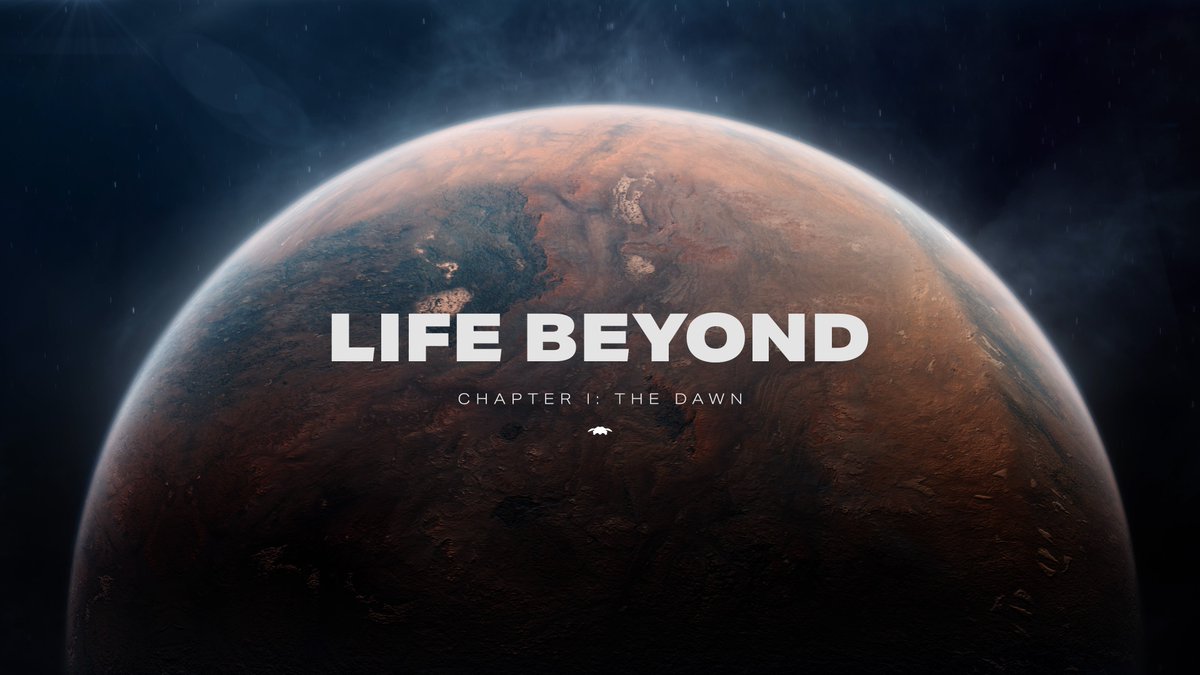
This post shares work of popular record label Melody Sheep. This post is for awareness purpose.
"Are we alone?" "Is Earth the only chapter in the story of life?" Why?Earth, 4 Billion Years Ago, It was just the right distance from its star to contain huge oceans of liquid water. And deep beneath those oceans, at cracks in the Earth's crust, fantastic chemistry began to happen atoms combined in all sorts of exotic combinations. The exact recipe is still a mystery, but the ingredients for life are simple - energy, organic molecules, and liquid water. Somewhere in the seas of the early Earth, basic chemistry became biology - perhaps even more than once. The first cells were likely born in hot volcanic waters, in conditions once thought impossible for biology. The closer we study life, the more extreme places we find it thriving. The closer we study life, the more extreme places we find it thriving. Here on our planet, microbes have adapted to survive the most hostile conditions. Arid deserts, the frozen Himalayas, in trenches under thousands of tons of pressure in the ocean deeps. In the vacuum of a space simulator, life forms have been flourishing for years without oxygen. New research suggests that life emerged over 4 billion years ago, when Earth was an alien and deadly place. The planet was ravaged by intense volcanism and an asteroid storm that lasted 100 million years. Yet even in these extreme conditions, life quickly found a foothold. Yet even in these extreme conditions, life quickly found a foothold. Very very quickly, as soon as the Earth cooled off after its formation, we know that life began here. Because it happened quickly here on Earth, we think it is going to happen quickly on other planets as well.KEPLER-62F Distance: 1200 Light Years. Size: 1.4x Earth. Temperature: ≥ -85ºF. Age: ~7 billion years. Possible Water WorldTEEGARDEN-B Distance: 12 Light Years. Size: 1.07x Earth. Age: 8 billion years. Minimum temperature: ≥ 20ºF. Possible Water WorldIn the entire universe, the possible number of habitable planets is staggering: 100,000,000,000,000,000,000.Titan is especially alluring - larger than Mercury and speckled with methane lakes and organic compounds. In 2026, NASA plans to send a drone to Titan, seeking out signs of life in its valleys and craters. here may be 100 trillion exomoons in our galaxy alone - 100 times the number of planets. Some may even be Earth sized, with atmospheres and surface water. With so many places to find life, it seems only a matter of time before we make a discovery. Some think we already have. On June 30, 1976, the Viking lander on Mars found something that still remains unexplained. After being injected with nutrients, Martian sol samples expelled signature radioactive gas - just like soils from Earth.How exciting is that?"Are we alone?"100 Thousand Years Ago5 Million Years Ago50 Million Years Ago200 Million Years Ago400 Million Years Ago1 Billion Years Ago3 Billion Years Ago5 Billion Years Ago13.8 Billion Years AgoFor its first few million years, the cosmos was too hot for life as we know it. The ambient temperature would have boiled you alive. When it was finally cool enough for life, there were no stars and planets Only huge lumbering clouds of hydrogen. After 70 million years, gravity took hold of these clouds and spun them into the first generation of stars. The first stars were massive and bright, but there was no life to watch them rise. Vital heavy elements were still being forged in their hot stellar cores. Not even The Big Bang was hot enough to create them. The only elements that were created on The Big Bang were hydrogen, helium and a little bit of lithium. All the stuff that makes your life liveable those elements weren't created on The Big Bang.Death And RebirthCould this have been dawn of life? Alien beings feeding off the heat of the Big Bang?Maybe primitive life is common, but intelligence is exceedingly rare. Maybe space is just too vast for feasible communication. Or maybe we are the first. Could we be the opening chapter in a sprawling history of life?14 Billion Years16 Billion Years18 Billion Years20 Billion Years 80 Billion Years100 Billion Years120 Billion Years140 Billion Years800 Billion Years32 Trillion Years70 Trillion Years90 Trillion Years~100 Trillion Years Later"What might come long after us?"And if biology does persist far into the future, then we live in a privileged moment. In later chapters, the universe will seem far different. The expansion of spacetime will make distant stars invisible, and the night skies will go dark. Perhaps life in the far future will wonder: What it was like to live in the universe's brilliant early days? We are lucky enough to know the answer All we have to do is look up.Support This Production At patreon.com/melodysheep Melodysheep.com Twitter: @musicalscience Instagram: @melodysheep_Follow your curiosity. Lead humanity forward.

.jpeg)