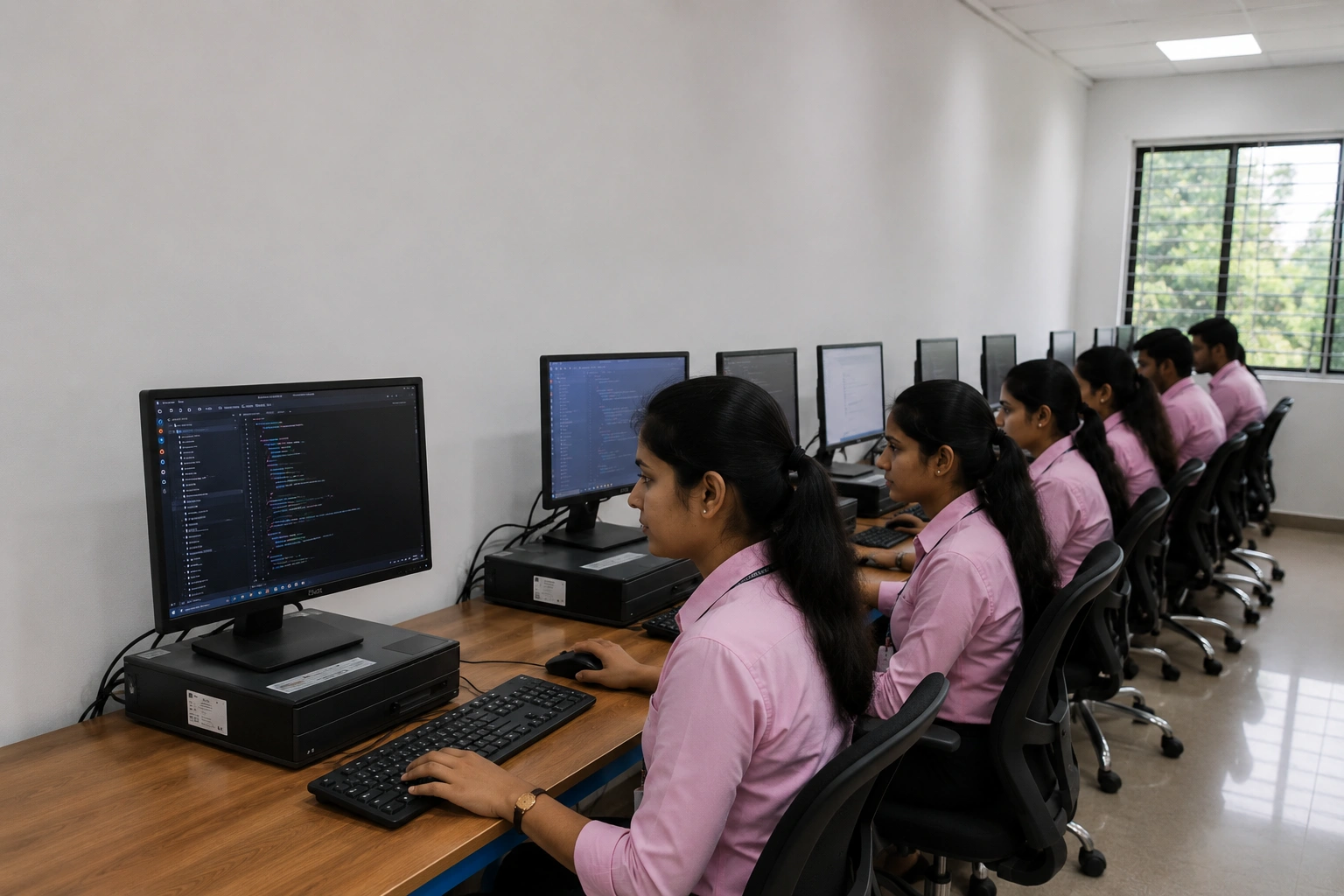




Comprehensive Clinical & Practical Training
The BCA curriculum is carefully crafted to provide students with a well-rounded education in computer applications. The program covers a wide range of subjects, starting from the basics of computer science to advanced topics in software development and programming.
Some of the core subjects in the Bachelor of Computer Application curriculum include:
- Programming Languages: This subject introduces students to various programming languages such as C, C++, Java, and Python. It focuses on developing problem-solving skills and logical thinking.
- Database Management: This subject covers the principles of database design, implementation, and management. Students learn about SQL, database normalization, data modeling, and more.
- Computer Networks: This subject explores the fundamentals of computer networks, including network protocols, network security, and network administration. Students gain a deep understanding of how data is transmitted and shared across different devices.
- Web Development: This subject focuses on web technologies such as HTML, CSS, JavaScript, and PHP. Students learn to create dynamic and interactive websites and gain practical experience in building web applications.
To successfully complete a Bachelor of Computer Application program, students must navigate through a well-defined syllabus that covers all the essential topics in computer science. Here is a breakdown of the BCA syllabus:
- Semester 1: Introduction to Programming, Mathematics, Computer Organization, Digital Electronics, and English Communication.
- Semester 2: Data Structures, Discrete Mathematics, Object-Oriented Programming, Operating Systems, and Environmental Studies.
- Semester 3: Database Management Systems, Web Technologies, Computer Networks, Software Engineering, and Elective 1.
- Semester 4: Computer Graphics, Mobile Application Development, Software Testing, Elective 2, and Project Work.
- Semester 5: Artificial Intelligence, Internet of Things, Cloud Computing, Elective 3, and Project Work.
- Semester 6: Big Data Analytics, Cybersecurity, Machine Learning, Elective 4, and Project Work.
Unlocking BCA Meaning: Understanding the Significance of the Acronym
BCA stands for Bachelor of Computer Applications, but what does it really mean? BCA is a degree program that focuses on the practical aspects of computer applications. It is designed to bridge the gap between theoretical knowledge and real-world applications.
BCA graduates are equipped with the skills and knowledge to develop software applications, manage databases, create websites, and analyze data. The program emphasizes hands-on learning and practical experience, ensuring that graduates are well-prepared to enter the workforce.
The Bachelor of Computer Application program is highly regarded in the industry and is recognized as a valuable qualification for various roles in the IT sector. Whether you aspire to become a software developer, database administrator, web designer, or data analyst, a BCA degree can open doors to a wide range of career opportunities.
BCA Jobs Outlook: Exploring Lucrative Career Opportunities for Graduates
One of the biggest advantages of pursuing a BCA degree is the wide range of career opportunities it offers. Graduates of BCA programs are in high demand in the IT industry and can explore various roles in both the public and private sectors.
Some popular career options for BCA graduates include:
- Software Developer: BCA graduates can work as software developers and design, develop, and test software applications.
- Database Administrator: With their knowledge of database management systems, BCA graduates can work as database administrators and ensure the smooth functioning and security of databases.
- Web Designer: BCA graduates with expertise in web development can work as web designers and create visually appealing and user-friendly websites.
- Data Analyst: Bachelor of Computer Application graduates with a specialization in data science can work as data analysts and analyze large datasets to derive insights and make informed business decisions.
- Network Administrator: BCA graduates with knowledge of computer networks can work as network administrators and ensure the efficient functioning of network systems.
These are just a few examples of the career opportunities available to BCA graduates. The IT industry is constantly evolving, and new roles and opportunities continue to emerge.
BCA Course Benefits: Why Pursuing a BCA Degree Can Shape Your Future
Pursuing a BCA degree offers numerous benefits that can shape your future and set you up for a successful career in the IT industry. Some of the key benefits of pursuing a BCA degree include:
- In-Demand Skills: BCA programs provide students with the skills and knowledge that are highly sought after in the IT industry. From programming languages to database management, BCA graduates are well-equipped to tackle the challenges of the industry.
- Practical Experience: BCA programs emphasize hands-on learning and practical experience. Students work on real-world projects and gain valuable industry exposure, preparing them for the demands of the workforce.
- Career Opportunities: The IT industry offers a wide range of career opportunities, and BCA graduates can explore various roles such as software developer, database administrator, web designer, and more. The demand for skilled professionals in the IT sector ensures ample job opportunities for BCA graduates.
- Growth Potential: With the rapid advancements in technology, the IT industry is constantly evolving. BCA graduates have the opportunity to continuously learn and upskill, ensuring long-term growth and career advancement.
- Networking Opportunities: BCA programs provide students with networking opportunities with industry professionals, alumni, and fellow students. Building a strong professional network can open doors to new opportunities and collaborations.
By pursuing a Bachelor of Computer Application degree, you can gain a strong foundation in computer applications and position yourself for a successful and fulfilling career in the IT industry.

Mission Statement & Student Outcomes
The mission of the program is to provide a comprehensive, industry-aligned education that prepares competent, entry-level professionals for the healthcare community. Students master precision techniques, patient care protocols, and advanced diagnostic workflows.
- National certification & licensing readiness
- Direct clinical exposure across affiliate hospital networks